

[1] A chaplain once shared with me his practice of entering a patient’s room by asking the patient who had already visited. He would name the likely guests — fear, guilt, uncertainty — not as a diagnosis, but to open a door. Whatever the patient confirmed or corrected, a conversation had already begun. He arrived like a tracker reading the ground. He was curious about what had been happening in that room before he got there and was ready to follow rather than lead. Which, in an ironic way, was exactly what made him useful.
[2] That same posture — arriving curious, ready to receive as much as to give — is what David Brubaker, a congregational researcher and consultant, and Alastair McKay, an Anglican priest and veteran of conflict transformation work, are asking congregations to practice in their neighborhoods. It requires shedding the privilege a congregation’s position gives.
[3] Brubaker’s research shows that congregations focused outward are less prone to conflict than those turned inward. McKay arrived at the same conviction after two decades of conflict transformation work and after answering the call to ordained ministry that he had resisted until he could no longer do so.
[4] Brubaker’s own story shows what that shedding looks like on the ground. He tells the story of his move to Casa Grande, Arizona, as the executive director of Seeds of Hope, a faith-based community development organization. He and his family moved into the Cabana neighborhood, a place locals called “the projects.” Gunshots outside their home were not uncommon. His decision to live where he worked opened doors no organizational initiative could have unlocked. A coalition of neighbors, a local school, a housing manager, and the police department together transformed Cabana into a safer, more stable community.¹
[5] Alastair McKay takes the reader across the Atlantic to rural England. One story that stands out for me is about the church becoming the guest rather than the host. Pioneer priest Luci Morriss and a lay leader describe their rural congregation’s decision to set up a stall at Hay Pride, the first Pride festival, in their nearest town.²
[6] They arrived with trepidation. The organizers were surprised that a church wanted to be there at all. People streamed to their stall, saying they had never expected to see a church show up. Conversations opened that had been closed for years. The congregation had not hosted the event. They had shown up as guests at someone else’s table.
[7] The book’s authenticity is grounded in the authors’ decision to illustrate their thesis by letting practitioners tell their own stories. Readers don’t hear about community engagement from a distance; they hear it in the voices of the people living it. That same spirit carries through to the end of each chapter, where questions invite readers to imagine what reconciling mission might look like in their own neighborhoods and congregations.
[8] If the title feels somewhat abstract at first, the stories in Reconciling Mission bring its meaning steadily into focus. The church has always known how to serve. Hospitals, nursing homes, shelters, and care centers stand as monuments to congregations’ decisions to turn outward. What Brubaker and McKay are recovering is older than any of those institutions — a patient, Spirit-led way of belonging to a place, learning its people, and letting relationships give programs their life and meaning.
[9] This is evangelism. Not the kind that arrives with answers, but the kind D.T. Niles had in mind when he wrote that evangelism is one beggar telling another where to find food.³
[10] This book is an invitation to that kind of faithfulness. For any faith leader wondering whether there is a path forward for a congregation, this book is worth your time.
¹ David Brubaker and Alastair McKay, Reconciling Mission: Realizing God’s Reign through Community Engagement (New York: T&T Clark (Bloomsbury Publishing Inc), 2026), 72–73.
² Ibid., 54–55.
³ D.T. Niles, That They May Have Life (New York: Harper & Brothers, 1951), 96.
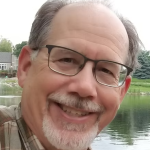
Peter Soli is an ordained pastor in the Evangelical Lutheran Church in America and the founder and director of Dialog Works, a nonprofit supporting faith communities through conflict transformation, dialogue, and discernment.