

A Story from Malaysia: Standing Together Against Violence
[1] When I started as a church planter in the year 2000, I never set a goal to be a prophet or social activist. I do not think my Malay-Muslim friend Ali, who was a businessman, not a religious leader, saw himself as my fellow comrade for social change either. We met in 2008 as polling agents for free elections. Religious tensions were high—Malaysian Christians’ use of “Allah” in our Malay translated Bibles had become controversial to the Malay-Muslim majority.[1]
[2] In January 2010, the threat of wider violence erupted. A church was firebombed. Other places of worship vandalized. Fear was in the air among citizens. I was driving to the church office when my phone rang. Ali’s voice was urgent: “Heads of wild boar were thrown into a mosque compound on Old Klang Road. This could escalate. Can you go to the site?” I redirected the car. When I arrived, tension hung thick in the air. I stepped out, uncertain what to say, but knowing inaction wasn’t an option. I managed brief contact with those at the mosque—first the gardener, who pointed me to the mosque leadership.
[3] On 30th January 2010, together with Ali, Muslim NGO leaders, secular activists, and myself as a young pastor, we stood with the mosque. No large media presence. No fiery speeches. Just a small group united in one message: We reject political violence. We stand together.
[4] That month was terrifying and tense. Places of worship were attacked. Fear gripped communities. But friendships like ours became bridges. This was about more than interfaith solidarity— it was citizens from different communities coming together for the common good. For me, it deepened the experiences I have had thus far that would inform my own theological and ethical reflections.[2]
From a Local Pastor to a Global Perspective
[5] Fast forward to January 2026. I am reminded of this story because it laid seeds for returning to hope alone that has occupied my mind recently.
[6] Even back then I was suspicious of uncritical optimism. I was not naive about Malaysia’s religious tensions or political manipulation. The situation was dangerous. But I was equally unwilling to dwell in paralyzing pessimism. I didn’t assume engagement was futile or solidarity impossible.
[7] Hope, for me, meant a kind of hope that embraces God’s future vision of healing to reshape the messy reality of Malaysia in January 2010—refusing to let fear or past violence determine present action.
[8] Now, I have transitioned from an activist Malaysian pastor to serving as the Director for Theology, Mission and Justice at LWF, based in Geneva, with a global overview. But I will not forget my roots as a Malaysian-Chinese minority theologian. This continues to help me receive gifts from different parts of the communion and share gifts others haven’t seen, gratefully appreciating the dynamism through which we learn from each other.
[9] During these times of despair, I invite you on a journey through different spaces—Colombia, Ethiopia, Finland, Hungary—to receive gifts from global communities of public witness, grounded in hope alone. In doing so I will show what Lutheran ethicists can learn from churches who share hope that empowers their public witness.
Where Are We? Trapped Between Global Powers
[10] The Lutheran Ethicists Network gathered here in Washington, D.C.—a center of power where decisions impact the world. I come from Geneva—another power center for human rights work, where the World Council of Churches and Lutheran World Federation are based. But today, our focus isn’t on viewing the world through the perspective of these centers. Instead, let us pay attention first to churches far from power— many of our member churches are navigating public witness in extremely complex situations.
The Global Reality: When Elephants Fight…
[11] The 2023 LWF Assembly in Kraków named our context clearly:
We live in a divided world where bodies are hurting, rejected, excluded, and the earth suffers from environmental crisis. The war in Ukraine has left hundreds of thousands dead. We remember Ethiopia, Myanmar, Palestine, Sudan, Venezuela—places where violence claims lives and disrupts communities.[3]
[12] The LWF 2025-2031 strategy highlights “how nationalism, fundamentalism, xenophobia, and populism are rising globally, where fear is exploited to maintain power.”[4] This statement resonates with The Economist’s summary of 2025: political turmoil, AI’s rise, Gaza’s ceasefire alongside horrific violence in Australia, Latin American instability, aid sector disruption, religious landscape shifts from Rome to Canterbury, and ongoing conflicts worldwide. According to the Global Conflict tracker, we have dozens of ongoing wars. And 2026 doesn’t look better—already on January 3rd, new crises continue to unfold.[5]
[13] A Malaysian proverb states: “When elephants fight, the mouse deer dies in between.”[6] This is where many of our churches are located. Colombian Lutherans are caught between armed militants and government forces. Ethiopian Lutherans are trapped between ethnic factions and government military actions. Palestinian Christians live between Israeli military, Hamas, and foreign powers. Myanmar Christians endure under military rule while recovering from the forgotten earthquake. These are snapshots of churches who are caught in the middle while global powers and national forces fight their battles.
[14] The Lutheran World Federation as a communion of churches is caught in this reality too. We’re not a geopolitical power. We have no armies; no economic leverage compared to nation-states. When superpowers posture themselves, when oligarchs consolidate control over economy, when religion is instrumentalized by political actors, religious communities are vulnerable before the impact of these forces too. There is the abuse of power that hurts, wounds, and kills.
[15] But people of faith do not surrender in despair and hide from global currents and national realities. Many churches who struggle in these situations remind us: Those trapped between global powers need to develop a different kind of wisdom. Rather than the wisdom of dominant power, we are called to a deep strategic wisdom: knowing when to speak and when to listen, building unexpected alliances, persevering when defeat seems certain, and finding creative ways when confronted with limited options.
[16] Within the LWF, there are 154 member churches in 99 countries: A significant number of churches are without political power—all minorities in majority contexts who are clearly distant from decision-making centers. Yet their faithful presence itself is public witness.
[17] The LWF works with member churches through the work of theology, leadership, diaconal action and actions for justice in their contexts, in partnership (not paternalism), through mutual learning, and sometimes on behalf of churches when a global or regional public voice and advocacy is needed; in some situations serving the neighbors especially refugees and internally displaced persons. We serve in the midst of the complexities and entanglement of power and wealth and self-interest against the common good of the societies in which Lutheran churches live and witness.
Hope as Lens
[18] Our theological trajectory has been moving toward hope. In Namibia 2017, we declared that salvation, human beings, and creation are “Not for Sale”—connecting Reformation theology of justification to justice.[7] In Kraków 2023, we declared: “Hope is the lens through which we look at the world, as followers of Christ, journeying together into the future.”[8] Hope as lens shapes the way we view the reality we are in.
[19] This is not naive optimism. It is hope that takes seriously pastoral lament, societal grief, and concrete prophetic action. It is discovering hope in this world where Lutheran theology becomes concrete, confident, embodied in member churches’ lives wherever they’re located.
[20] Brazilian theologian Vítor Westhelle taught us to think about eschatology not just as when but as where.
Eschatology is, therefore, not primarily about cosmic catastrophes or abstract speculations about time and eternity; it names the experience of a crossing in which the messianic is an occurrence in time that becomes kairotic, and in spaces, choratic. Such messianic experience in space and time entails a faint promise of a weak epiphany, not a cosmic Armageddon. However, such epiphanies are not given to the common gaze, but those who have been at the eschaton have a claim upon them. This claim taxes memory and keeps the flame of hope kindled.[9]
[21] By this spatial turn, we recognize afresh how geography matters, location matters, and significantly, proximity to power matters. But he reminds us to pay attention to “little stories” in everyday spaces—not just grand narratives of nations and empires. There’s promise even in the “weak epiphanies” that express hope.[10]
Listening to Churches Distant from Power
Columbia: Small Church with Strategic Presence
[22] The Evangelical Lutheran Church of Colombia (IELCO) of about 2500 members witnesses in a nation of near 50 million with a majority of 63.6% Catholic.[11] Fifty-two years of civil war with the Revolutionary Armed Forces of Colombia (FARC) has resulted in over 220,000 killed, millions displaced, and Indigenous communities severely affected. The 2016 peace agreement brought fragile hope—fragile because contested, partially implemented. The 2022 election of Gustavo Petro, a former guerrilla, brought complexity with violence from other armed groups lingering on. Yet, this tiny Lutheran church positioned itself in post-conflict zones for decades–not arriving after peace was declared, but being present during the conflict and violence.[12]
[23] The Evangelical Lutheran Church of Colombia works directly with helping former FARC fighters transition and reintegrate to civilian life. They accompany indigenous communities returning to land stolen during war. They participated in the Inter-ecclesial Dialogue for Peace platform highlighting “restorative justice as part of the healing process [from Colombia’s long-running conflict] and support ways of finding acts of reparation for those involved in crimes to tell the truth about what happened and ask forgiveness from the affected communities.” They contribute to ecumenical engagement, a small Lutheran church working alongside the Catholic majority, the Pentecostals, and other grassroots faith organizations.[13]
[24] Luz Mary Cartagena who is an ex-combatant acknowledged following the path of peace hasn’t been easy—many ex-combatants have been murdered, many are disillusioned because “the government abandoned them.” But Luz Mary, the vice-president of a territorial training and reintegration space stressed “The Lutheran church did not forget us. This accompaniment must continue—hope must be kept alive.”[14]
[25] Through this church we are reminded that hope alone in God’s vision of restored community enables Indigenous leaders to return to land where their families were killed, it empowers the church to accompany many ex-combatants whom the state has written off toward reintegration. Small churches like IELCO can make a difference through strategic presence and theological clarity.
Ethiopia: Resilient Presence and Holistic Ministry
[26] In 2023, I visited the Ethiopian Evangelical Church Mekane Yesus (EECMY) for the first time with former Colombian Bishop Atahualpa. That visit was particularly difficult because an attack occurred in November 2022 before we arrived—church members were shot, requiring the president to issue a public statement to address the need for citizens to be protected from violence. During the training, the president of the church told us without too much commentary: “This person who walked in and shot the members is not Muslim. It’s one of us.”[15]
[27] The Ethiopian Evangelical Church Mekane Yesus (EECMY), is our largest member church globally with reportedly 12 million members.[16] But in Ethiopia, which is majority Orthodox Christian (43%), EECMY is significant but still minority. In November 2020, the Tigray conflict erupted that resulted in over 100,000 killed by 2022. It was a humanitarian catastrophe that was complicated by ethnic violence across different parts of the country. Prime Minister Abiy Ahmed—Nobel Peace Prize winner, initially seen as reformer—now presiding over crisis. The post-conflict fragility is ongoing.
[28] This large church faces significant struggles such as ethnic challenges within congregations mirror the nation’s fractures. Yet they persevere in witnessing to hope for their country and young people who yearn desperately for a better future
[29] Bishop Atahualpa and I visited to help ensure religious leaders—synod presidents, pastors—understood their role in peacebuilding. This is crucial for a church known for evangelism, ensuring they serve the whole person. This continues the legacy of Gudina Tumsa, Ethiopian Lutheran martyr executed in 1979, where he states:
In the revolutionary situation in which the country finds itself, internal tensions and animosities must be overcome if Ethiopia is to achieve justice for all. It is the duty of Christians, as individuals and in congregations, to pray and work for peace and reconciliation. As the body of Christ in the world, the church itself is made up of many people and various classes. In claiming the name of Christ, we must overcome differences of opinion by dialogue, suspicion by trust, and hatred by love.[17]
[30] Peacebuilding through EECMY church leaders and working ecumenically with Ethiopian Orthodox, Muslims, Catholics enables them to navigate ethno-religious divisions that are politically incentivized. They are navigating delicate internal and societal challenges as the church bears witness that resonates with Tumsa’s theological reminder that “the ontology of the church is determined by its eschatology. (The future is interpretative of the present). Defined in this sense, the church of God is a movement where the indicative and the imperative are intertwined.”[18]
[31] Large churches in fragile democracies need sophisticated political discernment shaped by eschatological hope demonstrating resilient presence amid imperfection.
Listening to Churches Closer to Power
Finland: Prophetic Voice from Cultural Position
[32] The Evangelical Lutheran Church of Finland (ELCF)—like that of many Nordic countries, historically a state church, now has declining membership but still occupies a significant cultural position. Finland is a stable democracy but also like others in Europe facing right-wing populism, anti-immigrant sentiment, and is further impacted due to proximity to Russia and Ukraine war.
[33] In 2009 the ELCF published its own policy paper, The Church and the EU– active participation and commitment to common values. In the document the ELCF stated its objectives for monitoring EU affairs and its commitment, when needed, to influence decision-making processes both at the national and EU-level. [19] On a national level, the church has sought to work with refugees and migrants, where parishes are “actively responding to the needs of migrants and asylum seekers, offering psycho-social support and practical help,” while the church participates in “public discussion about migration and values” and “maintains a positive and open dialogue with the immigration authorities.”[20]
[34] When majority churches refuse to use cultural position for power but instead use it for advocacy on behalf of vulnerable, they share hope that does not allow declining membership to mean declining prophetic voice.
[35] The ELCF shows that proximity to power is responsibility to serve our neighbor and not a privilege to preserve one’s status. The ELCF uses its cultural legitimacy not to maintain position but to open space for others.
Hungary: Critical Solidarity and Self-Critique
[36] Unlike the ELCF, the Evangelical-Lutheran Church in Hungary (ELCH), which consists of approximately 400,000 members in a Catholic majority nation, navigates through critical solidarity. Since 2010, Hungary continues what is termed “illiberal democracy.” There’s still electoral democracy but there’s also strict media control, weakened judicial independence, and further civil society restrictions. Church-state relations are complex—the government provides financial support to religious institutions for education, social services and cultural projects. Catholic, Reformed and Lutheran churches benefit from preferential status and influence.
[37] That is why it’s significant when Lutheran Bishop Tamás Fabiny publicly names dangers of church-state fusion while accepting government funding and maintaining theological independence. He navigates a difficult terrain while speaking on issues such as refugee reception, democracy, human rights, and the role of Christian values in society.[21] When responding to public discourse that excludes people, he spoke boldly. Listen to Fabiny’s words on the misuse of Christianity to spread hatred in 2019: “The Holocaust did not start with the gas chambers, but with vulgar jokes, provocations and social exclusion.”[22] Words matter because language shapes reality. Fabiny speaks this truth where one’s religious identity is used in political nationalistic discourse.
[38] Yet, at the same time, the Hungarian Lutheran church has also engaged in radical self-critique around child abuse cases. Fabiny spoke on public radio the following:
We are asking for the forgiveness of these children, to whom we failed to be witnesses of the kingdom of God, even though that is what Jesus promised them. We are asking for the forgiveness of those who have stumbled over our actions and whom we disappointed. The sin of the other is my sin, too. So, the church is asking for forgiveness.[23]
[39] In the public witness of the church, it can simultaneously embody prophetic critique and confession of sin where the church is both righteous and sinful—simul justus et peccator—lived out publicly. The church that critiques state power prophetically also confesses its own sin practicing repentance.
[40] Through the witness of ELCH, hope embodied in critical solidarity as an alternative way between government cooperation and complete opposition. Hope shaped by cross and resurrection—death to self-righteousness, new life through confession. Indeed, this is hope that enables facing our sin without despair—because hope is grounded in God’s promise of new creation, not our righteousness.
Hope as Melody: Invitations to Lutheran Ethicists
[41] After listening to LWF member churches who live with different proximities to power. What does a gathering of Lutheran ethicists in Washington DC do with what we have heard today? What are these churches inviting us to notice, to practice, to embody? The message is not: “Here’s the right model, replicate it.” But: “Here’s how Lutherans elsewhere are sharing and embodying hope, would you join them?”
Invitation 1: Keep singing hope’s melody.
[42] The LWF General Secretary Anne Burghardt’s 2026 New Year message draws on the light of Christ that changes our perspective:
The light of Christ changes all perspective. God can make us humans new by drawing us into this new perspective and inspiring us by it. This is a perspective that inspires not to diminish or oppress the other but sees in everyone God’s child made in God’s image.[24]
This is Hope as lens — Hope as the light of Christ changing all perspective.
[43] But there’s something profound about shifting to a musical metaphor and considering hope as a melody. This can be a constant that cuts across different contexts. Whether Colombia’s 52 years of war, Ethiopia’s ethnic violence, Finland’s cultural decline, Hungary’s illiberal pressure, or Malaysia’s religious tensions—the melody is recognizable: God’s future hope breaking into a violent hopeless present, resurrection life interrupting death and despair, and new creation of healing amid old structures of woundedness.
[44] The invitation to us all is not to invent our own melody, but to learn from churches who have been singing hope in the midst of the overcrowding noises of hopelessness and despair. It’s a song of hope—realistic, eschatological, grounded in promise—that sustains long-term commitment because it’s not circumstances-dependent. And when embodied, this hope then sings and resonates with member churches across different contexts bearing witness to the Gospel and advocating for a hopeful agenda rather than a hateful one in our world.
Invitation 2: Accompany one another and amplify hopeful voices.
[45] “Accompaniment” is an important word for us. Because the Lutheran public witness we are promoting is not dramatic and loud. But often through sustained presence over time, trust is created. This is based on mutual relations and mutual responsibility. This does not divide north and south. This is not the language of donor and recipient. But accompaniment is a walking with, which is what accompaniment literally means.
[46] Accompaniment also means amplifying other voices, not speaking for them. When a Myanmar church cannot speak publicly, LWF speaks at UN. When an Ethiopian church needs resources, global communion provides. When an Indonesian church needs support for climate justice, we stand with them. We follow closely churches trapped between global powers, walking alongside them as they navigate complexity. When churches in the Holy Land and Ukraine have wisdom, we in the global communion learn.
Invitation 3: Recognize multiple voices in sharing hope.
[47]When we were in Poland during the LWF 2023 assembly and had chance to reflect on the Holocaust because we were near to Auschwitz-Birkenau, we were challenged to reflect on what does never again mean. Even as a new Bishop of the Evangelical Lutheran Church in Jordan and the Holy Land (ELCJHL) steps into his new role after inauguration, there are questions on how we can continue to bear witness in the Holy Land. What will be the division of labor for us? What is the next step for churches in Myanmar? What might be the call to the churches in the United States? How each of our voices improvises and fits into the global chorus of the song of hope is a work in progress. We can only review how we did with the advantage of historical hindsight.
[48] To continue with the musical metaphor, for those distant from power such as in Colombia and Ethiopia: Churches accent service, presence, strategic positioning, relationship-building. Like bass and alto voices that are foundational, sustained, and carrying structure. For those closer to power such as in Finland, Hungary: Churches accent prophetic voice, public advocacy, moral authority, and systemic critique. Like soprano and tenor voices, they may be piercing, prophetic, and catching attention. It’s not about which is superior—a full chorus needs all.
Invitation 4: Commit to Accenting this hopeful harmony creatively together.
[49] There are those who are prophets and we value their contribution to our shared public witness in the spirit of appreciating multiple voices. However, my appeal here is more collective. This invitation has two dimensions.
[50] First, it is the call about us not doing our own thing and operating in an individualistic manner or seeing ourselves in isolation. Hope is where we focus and harness our energies together—even when we are in different locations.
[51] Second, it’s about hope beyond critique, bringing together an extension of God’s holistic mission through the churches today: faithful presence, loving service, advocating for justice, and hopeful proclamation.[25] In contexts where churches cannot change regimes or pass laws, where even speaking publicly carries risk, presence itself is witness. The church’s continued existence through worshiping, serving, and gathering testifies to reality powerful regimes cannot control. It is not just critique (though critique matters). It is not just service (though service essential). It is not just proclamation (though proclamation necessary). All dimensions are held together by hope.
[52] When my wife found out that she was battling blood cancer, we were wrestling with what this meant. An email came from a Norwegian friend with powerful words that encouraged her, “You don’t need to worry. You don’t need to think about anything. As you recover and receive medical treatment, you just need to live and be present.” For many of our churches, in moments like that, that is the only thing they can do—and that is witness we need to recognize in our own reflections as well.
[54] But there may be many others who still find a different way—like the mouse deer—to outwit the elephants. What are the creative ways we could still disrupt injustice, challenge the powers, the dominant powers that be?
[55] Prayer and protest are not mutually exclusive. They are different ways we express our public witness. Confession and critique can go together. I would extend it to include creativity that opens up new ways of shaping the work. I have been drawn to how powerless churches and even churches that are closer to power creatively offer quieter, and yet still hopeful approaches similar to what craftivist Sarah Corbett calls “gentle protest”.[26] This to be encouraging because the work of advocacy also has multiple ways, and each of us plays a part in the bigger picture, and part of the larger chorus of hope.
Conclusion: Join the Global “Hope Alone” Chorus
[56] Join us, the global Lutheran communion, as we continue to persevere even with our struggling voices in different parts of the world—and even here. During the 2024 LWF Americas Leadership Conference, the participants sang confidently: “Don’t Be Afraid, There Is Hope in Our Walk.” I would extend this to “Don’t be afraid. There is hope in our song.”
[57] We live in a time where we adapt the psalmist’s question: “How can we sing the Lord’s song of hope in a foreign land of despair?” We will lament, we will grieve, we commit to raise a prophetic voice in word and deed. But to persevere, we cannot give up hope. While we do not ignore the disappointment, frustration, and anger, we cling on nonetheless to hope alone that informs our lament, our grief, and our prophetic voice.
[58] Therefore, I would like to invite us to consider potentially another Reformation sola—a possible addition: Hope alone.
[59] The Reformation solas are about grace alone, faith alone, scripture alone, and Christ alone. They are all integrated and interconnected. However, each one might take center stage in different moments without being separated from one another. Now is the time to amplify hope alone, a possible extended Reformation Sola for our time, similar to Grace alone, faith alone, scripture alone, and Christ alone. We know they are all interconnected, but at this critical juncture Hope Alone is what we are called to embody and share courageously in our public witness now.
[60] Let’s not just talk about the global chorus. Let’s join the global chorus.
[1] For background on the “Allah” controversy in Malaysia, see Sivin Kit, “Malaysia: Reimagining Solidarity — The ‘Allah’ Controversy, Public Discourse and Interreligious Relations”, edited by Simone Sinn and Tong Weng Sze, Lutheran World Federation Studies, (2016): 161–178.
[2] Sivin Kit. “Christian Participation and Creative Resistance: Reflecting on Luther’s Two‐fold Governance in Muslim‐Majority Malaysia.” Dialog 56, no. 3 (2017): 260-271. https://onlinelibrary.wiley.com/doi/10.1111/dial.12337
[3] Lutheran World Federation, “Assembly Message,” Thirteenth Assembly, Kraków, Poland, September 13-19, 2023, accessed March 5, 2026, https://2023.lwfassembly.org/assembly-message.
[4] Lutheran World Federation, “LWF Strategy 2025-2031,” accessed March 5, 2026, https://lutheranworld.org/resources/policies-lwf-strategy-2025-2031.
[5] See The Economist. “The World This Year 2025.” December 18, 2025. Accessed January 17, 2026. https://www.economist.com/the-world-this-week/2025/12/18/the-world-this-year-2025. others name other significant events from a foreign policy perspective. https://www.cfr.org/article/ten-most-significant-world-events-2025, see also Council on Foreign Relations. “Conflicts to Watch in 2026.” Accessed January 17, 2026. https://www.cfr.org/report/conflicts-watch-2026.
[6] Translated from the original Malay: “Gajah sama gajah berjuang, pelanduk mati di tengah” This Malay proverb is commonly used in Malaysian discourse about power dynamics.
[7] For more information on the LWF 2017 Assembly, see Lutheran World Federation. “Twelfth Assembly, Windhoek, Namibia, May 10-16, 2017.” Accessed January 17, 2026. https://2017.lwfassembly.org/en.
[8] For more information on the LWF 2023 Assembly, see Lutheran World Federation. “Thirteenth Assembly, Kraków, Poland, September 13-19, 2023.” Accessed January 17, 2026. https://2023.lwfassembly.org/. For further commentary, see Piotr Kopiec, “A Mirror of Global Lutheranism: Thirteenth General Assembly of the Lutheran World Federation,” Studia Oecumenica 23 (2023): 247-263, https://www.ceeol.com/search/article-detail?id=1258589. and further theological reflection see editorial by Mary J. Steufert, “The Lutheran World Federation—Communion for reformation and hope”, https://onlinelibrary.wiley.com/doi/10.1111/dial.12868
[9] Vítor Westhelle, Eschatology and Space: The Lost Dimension in Theology Past and Present (New York: Palgrave Macmillan, 2012), 132.
[10] Sivin Kit, “Abound in Hope: An Invitation to a Hopeful Theological Agenda After the Thirteenth Assembly of the LWF,” Dialog: A Journal of Theology 63, no. 4 (2024): 143-150, https://doi.org/10.1111/dial.12867.
[11] Central Intelligence Agency, “The World Factbook: Colombia,” accessed January 17, 2026, https://www.cia.gov/the-world-factbook/countries/colombia/. Lutheran World Federation, “Member Churches: Columbia,” accessed January 17, 2026, https://lutheranworld.org/member-churches/search?search_api_fulltext=&field_n_region=107&field_n_country=CO&vkey=1. For information about IELCO, see Iglesia Evangélica Luterana de Colombia (IELCO), accessed January 17, 2026, https://ielco.org/.
[12] Lutheran World Federation, “Colombia: Pioneers for Peace,” accessed January 17, 2026, https://lutheranworld.org/news/colombia-pioneers-peacemakers.
[13] Lutheran World Federation, “Colombia: Pioneers for Peace,” accessed January 17, 2026, https://lutheranworld.org/news/colombia-pioneers-peacemakers.
[14] Lutheran World Federation, “LWF’s Involvement with Church and Society in Colombia,” accessed January 17, 2026, https://www.lwfassembly.org/news/americas-lwfs-involvement-church-and-society-colombia.
[15] Author’s personal notes from training session, November 2022, Addis Ababa, Ethiopia.
[16] Lutheran World Federation, “Member Churches: Ethiopia,” accessed January 17, 2026, https://lutheranworld.org/member-churches/search?field_n_country=ET&vkey=1.
[17] The Life, Works, and Witness of Tsehay Tolessa and Gudina Tumsa, the Ethiopian Bonhoeffer. United Kingdom: Fortress Press, 2017, 73.
[18] The Life, Works, and Witness of Tsehay Tolessa and Gudina Tumsa, the Ethiopian Bonhoeffer. United Kingdom: Fortress Press, 2017, 6.
[19] Eila Helander, “European Churches and the European Parliament Elections: The Case of the Evangelical Lutheran Church of Finland,” European Societies 19, no. 5 (2017): 580-599, https://doi.org/10.1080/14616696.2017.1334945.
[20] Lutheran World Federation, “Finnish Church: Integral Part of Society,” accessed January 17, 2026, https://lutheranworld.org/news/finnish-church-integral-part-society.
[21] Lutheran World Federation, “Walking with Refugees: Church Amid Refugee Crisis in Europe,” accessed January 17, 2026, https://lutheranworld.org/blog/walking-refugees-church-amid-refugee-crisis-europe.
[22] Lutheran World Federation, “Asking Forgiveness: Deportation of Hungary’s Holocaust Victims,” accessed January 17, 2026, https://lutheranworld.org/blog/asking-forgiveness-deportation-hungarys-holocaust-victims.
[23] Budapest Post, “Leader of the Lutheran Church Apologizes to Victims of Sexual Abuse,” accessed January 17, 2026, https://budapestpost.com/leader-of-the-lutheran-church-apologizes-to-victims-of-sexual-abuse.
[24] Anne Burghardt, “New Year Message 2026,” Lutheran World Federation, January 1, 2026, accessed January 17, 2026, https://lutheranworld.org/resources/document-new-year-message-2026 .
[25] Lutheran World Federation, Mission in Context: Transformation, Reconciliation, Empowerment – An LWF Contribution to the Understanding and Practice of Mission (Geneva: Lutheran World Federation, 2004). To access the document, see https://www.lutheranworld.org/content/resource-mission-context.
[26] See Sarah Corbett, How to Be a Craftivist: The Art of Gentle Protest (London: Unbound, 2017).
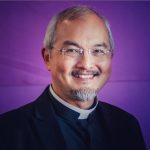
Sivin Kit serves as Director for Theology, Mission and Justice at the Lutheran World Federation in Geneva. A Malaysian-Chinese Lutheran theologian, his work focuses on contextual theology, interfaith engagement, and public witness. This article emerges from his keynote address to the 2026 Lutheran Ethicists Gathering in Washington, DC.